For a Consultation Call
+91 6361068489
For a Consultation Call
+91 6361068489
The Silent Threat: Understanding and Tackling Sudden Cardiac Arrest
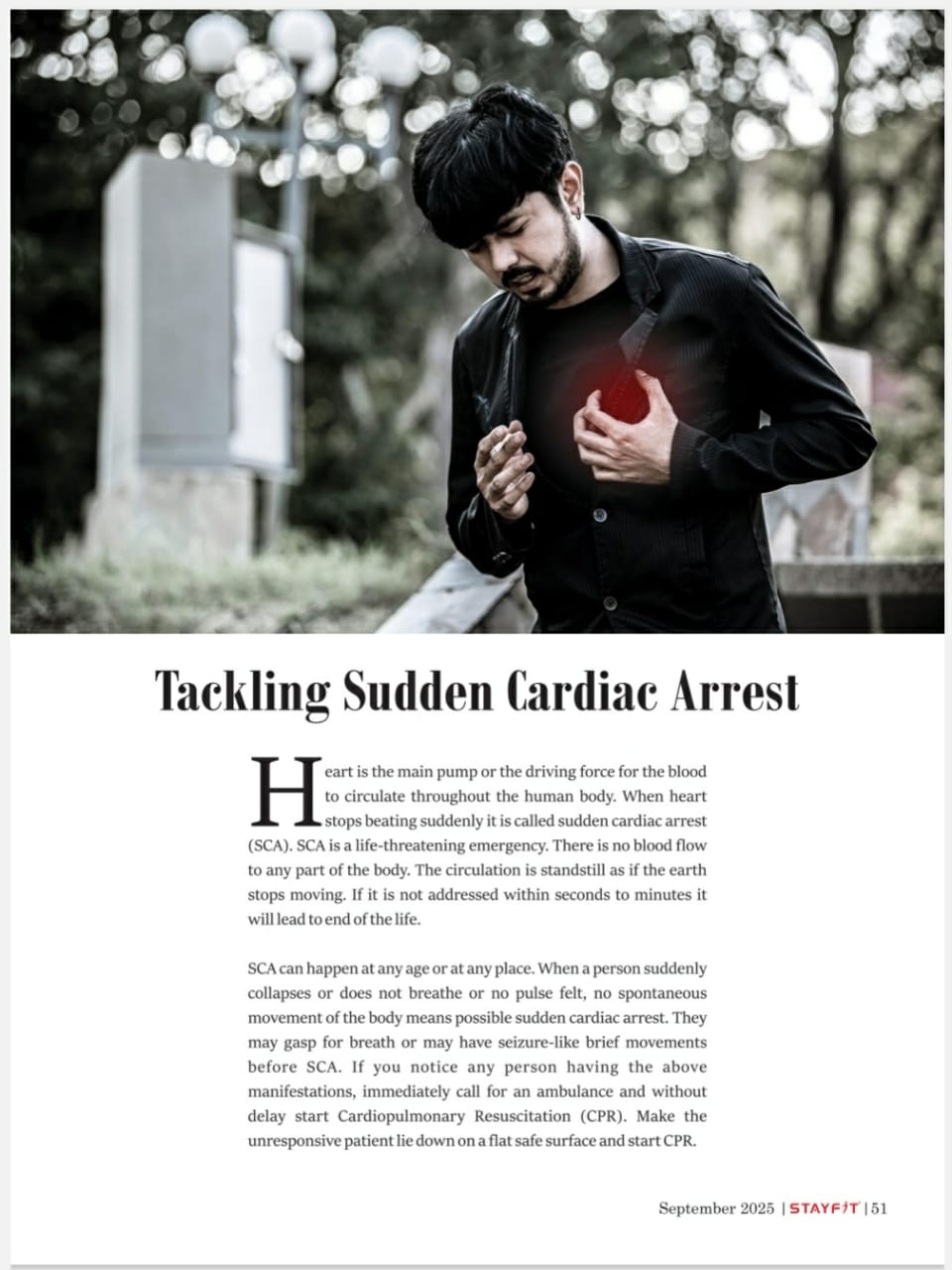
Sudden Cardiac Arrest (SCA) is a life-threatening medical emergency where the heart
unexpectedly stops beating. Unlike a heart attack, which is caused by a blockage in the blood
supply to the heart, SCA is an “electrical” problem. It’s a malfunction in the heart’s electrical
system, causing it to stop circulating blood to the rest of the body. When this happens,
circulation stands still—as if the Earth has stopped moving. Without immediate intervention,
it can lead to death in minutes.
Recognizing the Signs
A sudden collapse is often the first and most critical sign of SCA. The person may not
breathe or have a pulse. They might gasp for breath or have brief, seizure-like movements. If
you witness someone collapse with these symptoms, it is a possible sign of sudden cardiac
arrest.
The Immediate Response: Call and Act
Time is of the essence. If you see someone with these signs, your first action should be to call
for an ambulance immediately. Do not delay. While waiting for help to arrive, you can begin
to make a difference by starting Cardiopulmonary Resuscitation (CPR).
The Power of CPR
CPR is a critical and immediate measure to save the life of a person who has collapsed
helplessly. It can be started by anyone, regardless of the cause of the cardiac arrest. Bystander
CPR significantly increases the chances of survival by up to 30%. The survival rate of
patients who had SCA in the hospital is only 25 to 30%, and most are terminally ill. Seven
out of ten SCA cases happen at home or outside the hospital, making bystander CPR even
more crucial.
How to Perform CPR:
Positioning: Lay the unresponsive person on a flat, hard surface.
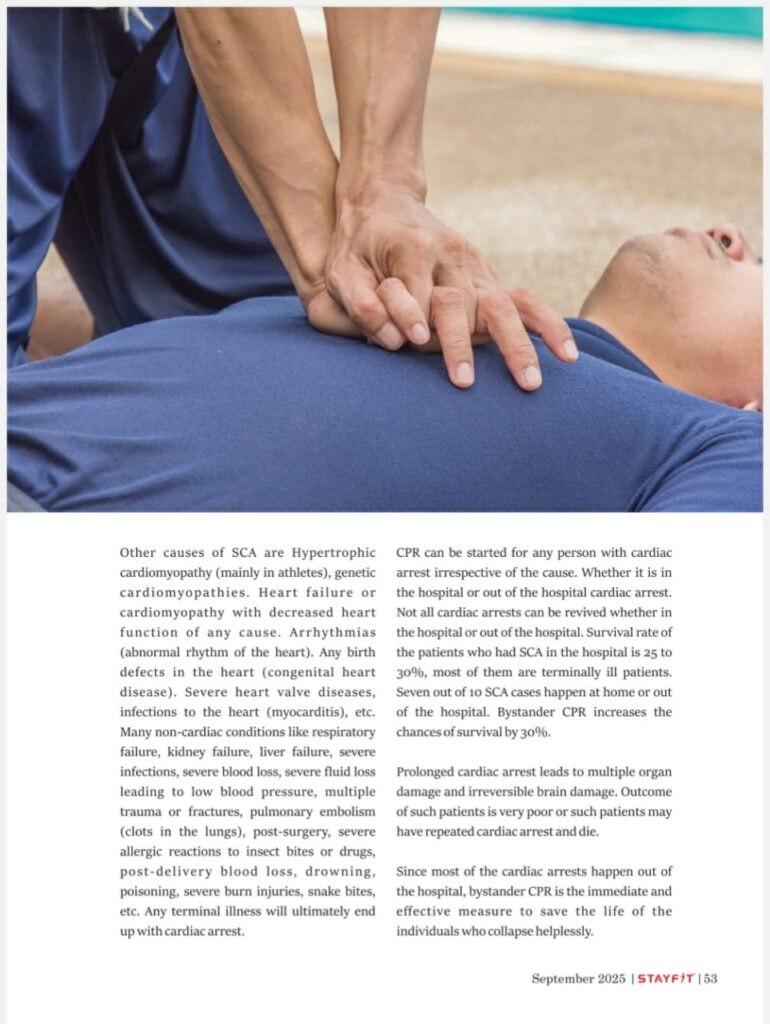
Compressions: Place the heel of one hand on the center of the chest, right between
the nipples. Place your other hand on top of the first, interlocking your fingers.
Technique: Push hard and fast on the center of the chest to compress the heart against
the chest wall and backbone, helping to pump blood. Compress at a rate of 100 to 120
compressions per minute. Push down at least 2 inches (5 cm) but no more than 6 cm.
Breaths (if trained): If there are two bystanders, 30 compressions can be given,
followed by two breaths.
Full Body Weight: Use your entire body weight, not just your arms. Keep your
elbows straight.
If you get tired, switch with another bystander to continue compressions. The goal is to
minimize interruptions and keep the compressions continuous until medical help arrives.
Beyond CPR: The Role of AED
An Automated External Defibrillator (AED) can be a lifesaver if available. An AED is used if
the SCA is caused by a shockable rhythm, such as ventricular fibrillation or pulseless
ventricular tachycardia.
Causes of Sudden Cardiac Arrest
While a heart attack can lead to SCA, many other factors can cause it, including:
Heart Conditions:
o Hypertrophic cardiomyopathy (common in athletes)
o Genetic cardiomyopathies
o Heart failure or cardiomyopathy with decreased heart function
o Arrhythmias (abnormal heart rhythms)
o Congenital heart defects
o Severe heart valve diseases
o Myocarditis (inflammation of the heart muscle)
Other Conditions:
o Severe non-cardiac conditions like respiratory failure, kidney or liver failure
o Severe blood loss
o Severe fluid loss leading to low blood pressure
o Multiple trauma and fractures
o Pulmonary embolism (clot in the lungs)
o Post-surgical severe allergic reactions
o Insect bites or drugs
o Post-delivery blood loss
o Drowning, poisoning, severe burn injuries, or snake bites
Any terminal illness will ultimately end in cardiac arrest.
The Outcome
Prolonged cardiac arrest can lead to multiple organ damage and irreversible brain damage.
Sadly, many patients who have had a repeated cardiac arrest do not survive. The survival rate
for SCA with bystander CPR and AED is 30%. However, every one-minute delay decreases
the survival odds by 10%. More than ten minutes of cardiac arrest can potentially cause
irreversible brain damage and death.
When medical teams or ambulances arrive, they use advanced life support measures to save
patients. It is everyone’s responsibility to know the basics of CPR and be prepared to act and
continue CPR for any SCA patient until medical help arrives. The immediate action of a
bystander can make the difference between life and death.
 Vegetarian Diet and Omega-3: Why Just Flaxseeds May Not Be Enough — And What Works
 The Silent Threat: Understanding and Tackling Sudden Cardiac Arrest
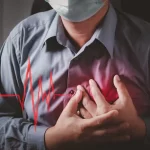 Understanding Sudden Cardiac Arrest: Why Bystanders Hold the Key to Saving Lives
 10 Signs of an Unhealthy Heart You Shouldn’t Ignore
 One Life & One Heart
Copyright 2020 - Dr. Vithal D Bagi Heart centre clinic. All rights reserved.